Our Lady of Lujan, is rendered as a small exquisitely carved santo by D. Cortes of the Cortes family of carvers from Ocotlán, Mexico, which is near Oaxaca de Juárez, Mexico. The Cortes (sometimes spelled Cortez) are known for their stylized bell shaped carvings of Madonnas, or '“virgenes”. Several members of the family were active from about 1920 to the 1950s. The madonnas are small, delicately stylized, richly colored, sweet faced flat figures with wide bell-shaped gowns with large, fanned haloes. “D Cortes” is stamped into the right side of the pedestal, and “made in Mexico” is stamped in ink on the bottom, 4 × 7 × ½ inches.
Our Lady of Lujan miraculously appeared to villagers of Lujan, Argentina around 1630, and since then has become the beloved patron of the Republic of Argentina.
Our Lady of Lujan, is rendered as a small exquisitely carved santo by D. Cortes of the Cortes family of carvers from Ocotlán, Mexico, which is near Oaxaca de Juárez, Mexico. The Cortes (sometimes spelled Cortez) are known for their stylized bell shaped carvings of Madonnas, or '“virgenes”. Several members of the family were active from about 1920 to the 1950s. The madonnas are small, delicately stylized, richly colored, sweet faced flat figures with wide bell-shaped gowns with large, fanned haloes. “D Cortes” is stamped into the right side of the pedestal, and “made in Mexico” is stamped in ink on the bottom, 4 × 7 × ½ inches.
Our Lady of Lujan miraculously appeared to villagers of Lujan, Argentina around 1630, and since then has become the beloved patron of the Republic of Argentina.

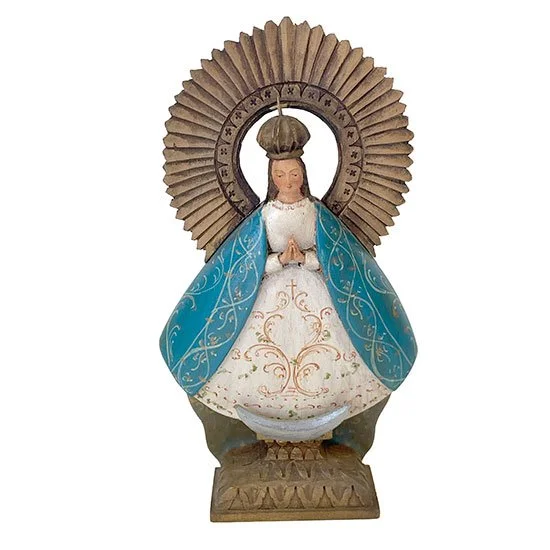 Image 1 of 7
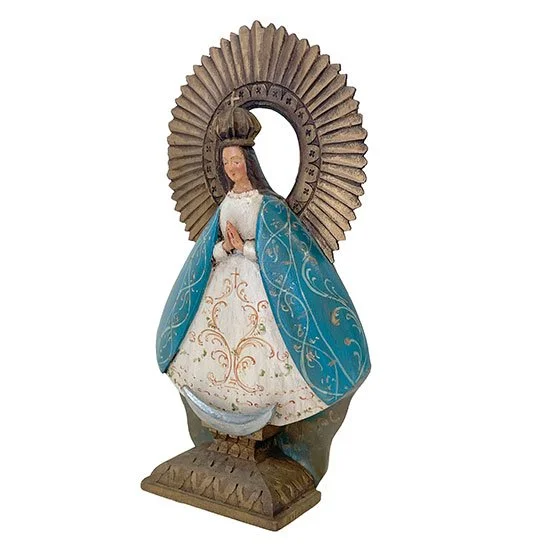 Image 2 of 7
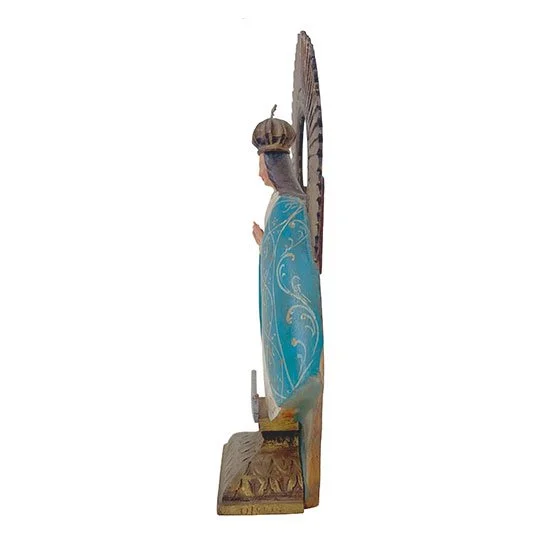 Image 3 of 7
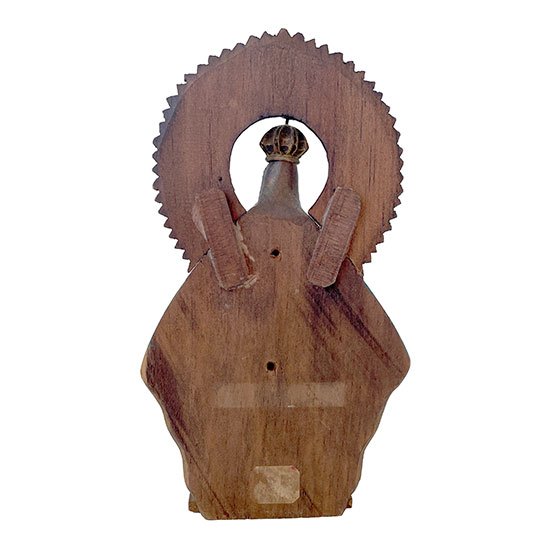 Image 4 of 7
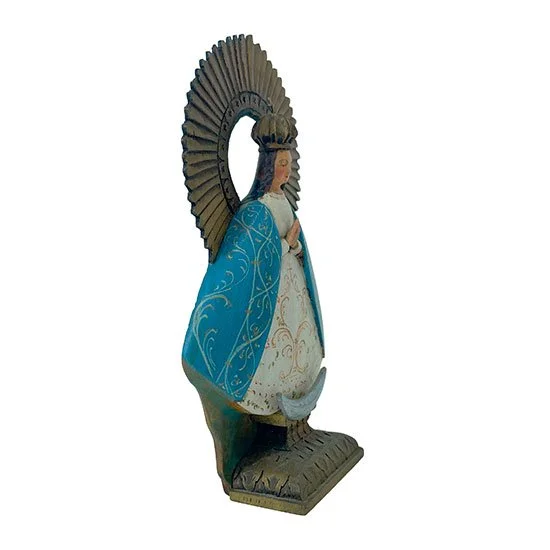 Image 5 of 7
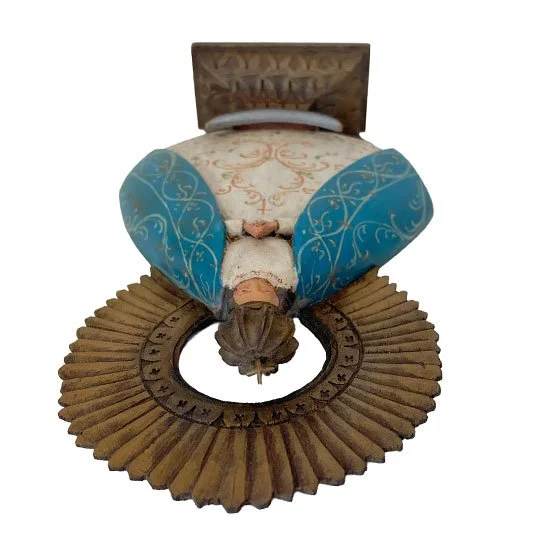 Image 6 of 7
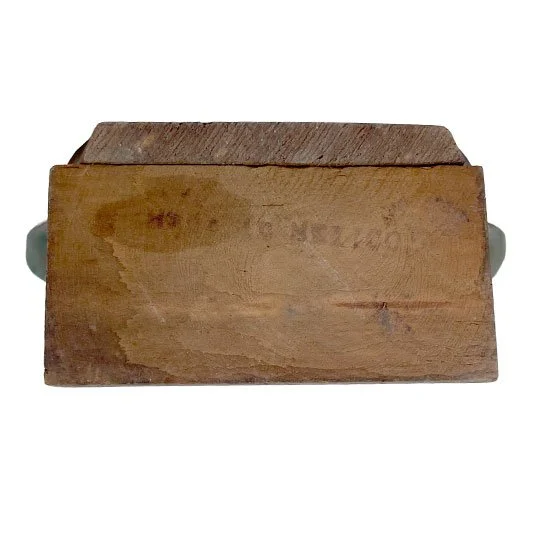 Image 7 of 7