Tramp Art Frame with six layers of chip carved wood arranged in pyramids of various widths, surrounded with a thin strip, also chip-carved, as an outside edge. The frame is covered with a sandy brown lightly metallic paint. The back of the frame consists of four wooden strips held in place with small wooden patches nailed or stapled on, and one long vertical piece which goes from top to bottom and a picture wire loop for hanging. The backing is is held in place with some antique nails and modern frame pointers. I didn’t want to risk removing anything, as it is somewhat fragile, in order to examine the interior: behind the glass is an antique color print of “The Lute Player” by Orazio Gentileschi (Artmesia’s dad!). The frame is from 1890 - 1910, 12 ½ x 15 ¾ × 1 ½ inches.
Tramp Art originated in Europe and the United States in the 1850s, reaching its height of popularity during the Depression years in America. It consisted of a simple woodworking style using cigar box wood, notched or carved with a knife, and layered with glue or nails to make pleasing geometric designs. During the Depression out-of-work and itinerant “tramps” might make charming objects in exchange for a little money or food.
Tramp Art Frame with six layers of chip carved wood arranged in pyramids of various widths, surrounded with a thin strip, also chip-carved, as an outside edge. The frame is covered with a sandy brown lightly metallic paint. The back of the frame consists of four wooden strips held in place with small wooden patches nailed or stapled on, and one long vertical piece which goes from top to bottom and a picture wire loop for hanging. The backing is is held in place with some antique nails and modern frame pointers. I didn’t want to risk removing anything, as it is somewhat fragile, in order to examine the interior: behind the glass is an antique color print of “The Lute Player” by Orazio Gentileschi (Artmesia’s dad!). The frame is from 1890 - 1910, 12 ½ x 15 ¾ × 1 ½ inches.
Tramp Art originated in Europe and the United States in the 1850s, reaching its height of popularity during the Depression years in America. It consisted of a simple woodworking style using cigar box wood, notched or carved with a knife, and layered with glue or nails to make pleasing geometric designs. During the Depression out-of-work and itinerant “tramps” might make charming objects in exchange for a little money or food.

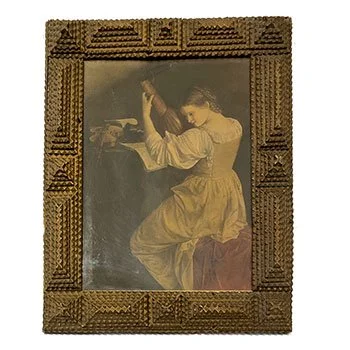 Image 1 of 6
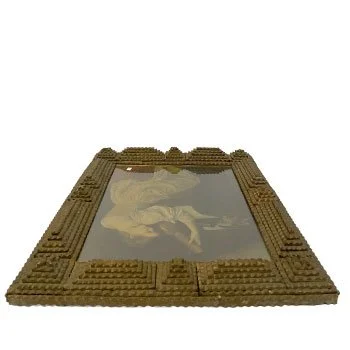 Image 2 of 6
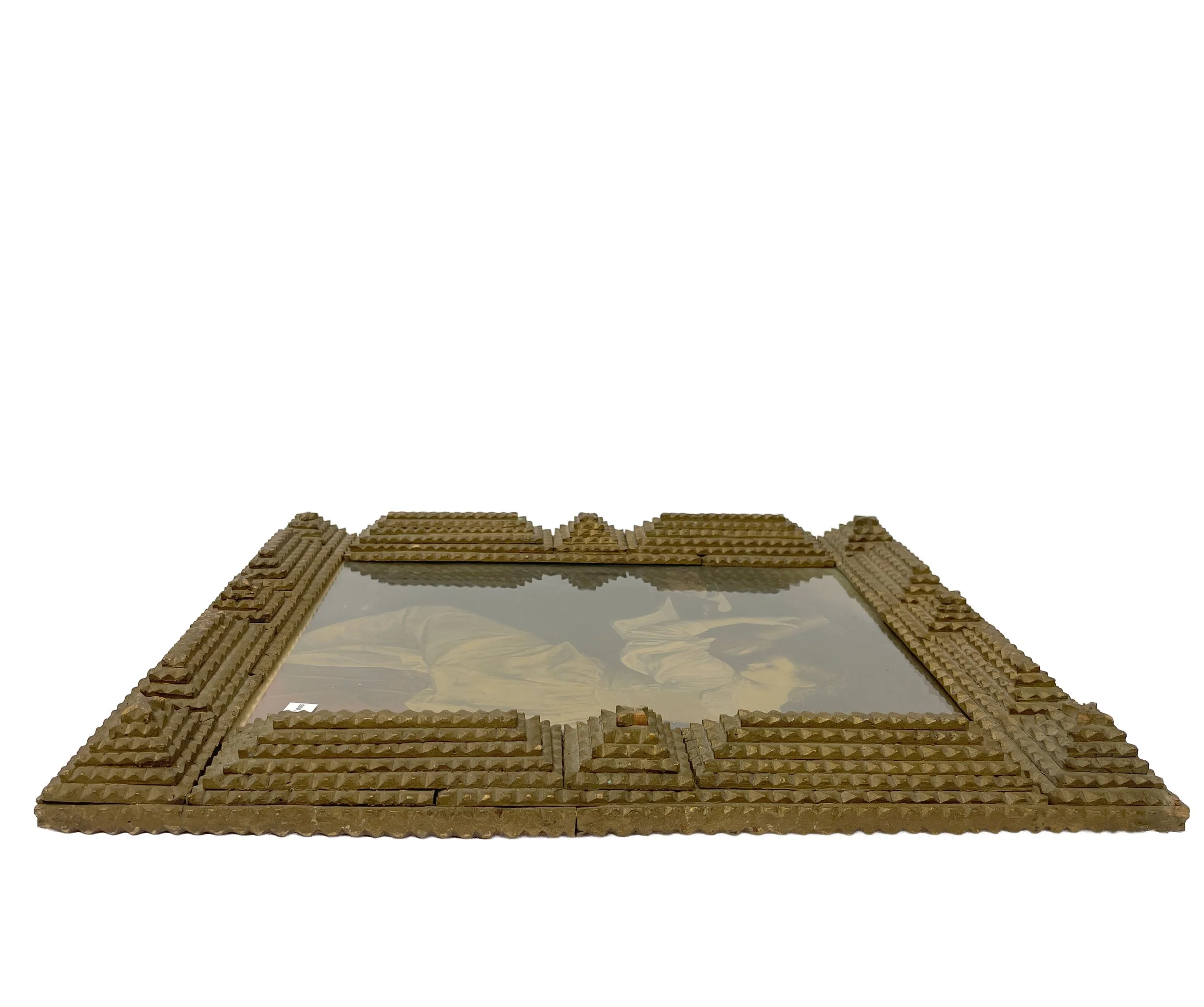 Image 3 of 6
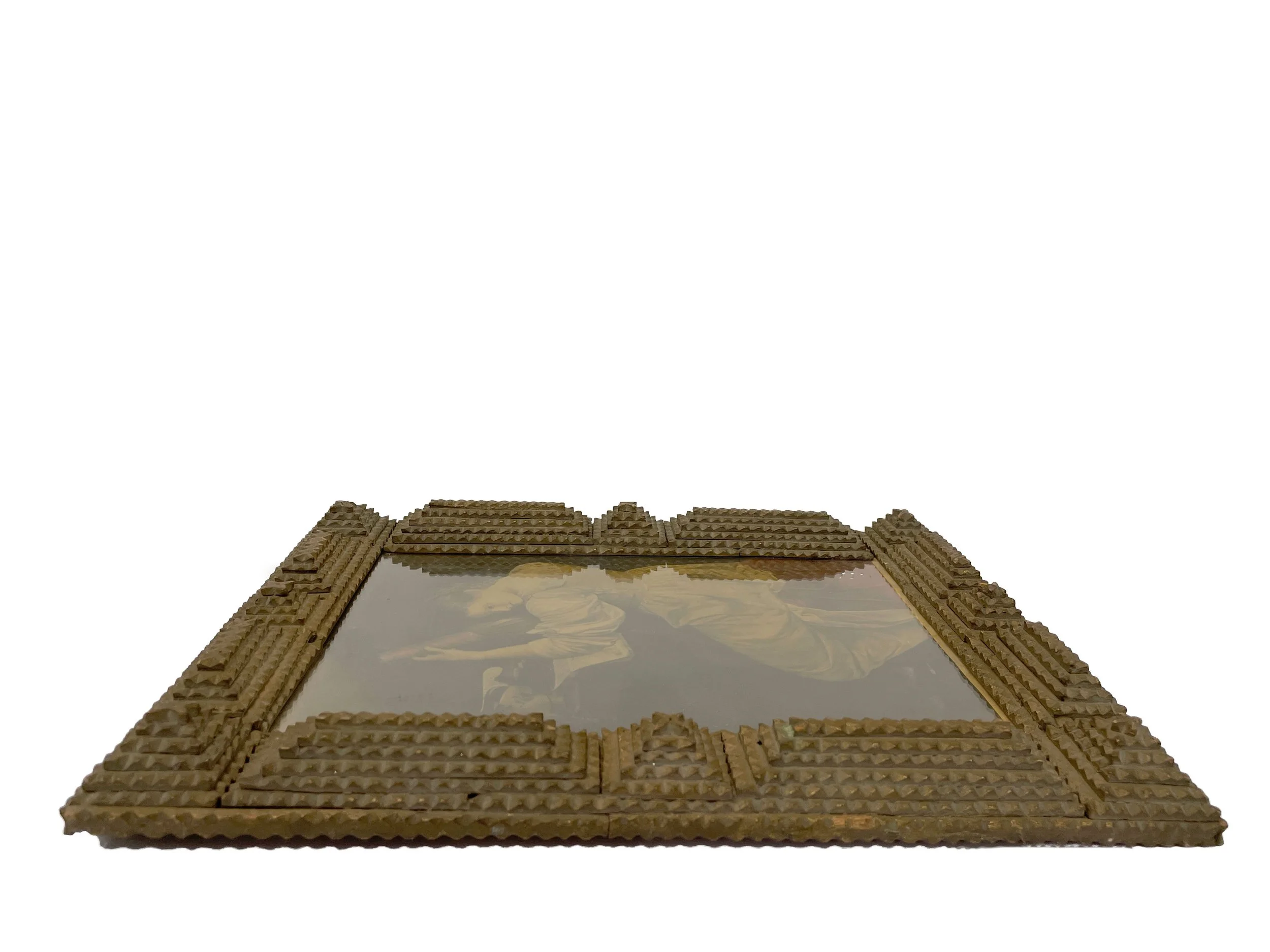 Image 4 of 6
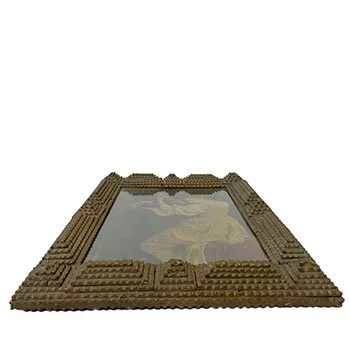 Image 5 of 6
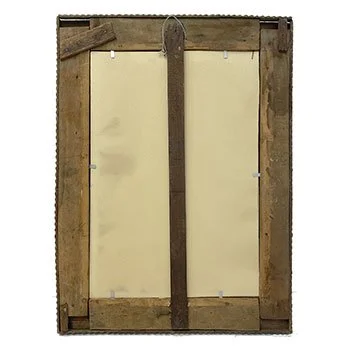 Image 6 of 6