Tramp Art Frame with four levels of chip-carved wood, topped with a smooth, rounded trim, then three layers of chip carved wood on the inside leading in to the glass covered window. A studio portrait of two men from the late 1800s is framed here, but the main attraction is, of course, the frame itself. The cigar box wood is a rich mahogany color, lightly varnished and slightly faded from sun exposure on one side. The back of the frame features beautiful bits of lettering from its time as a cigar box, three small wooden strips pivot to hold the image into the frame, there is a wire loop for hanging. From the turn of the last century, 7 ¼ x 9 ⅛ × 1 inches, the picture window is 4 ¼ x 6 ¼ inches.
Tramp Art originated in Europe and the United States in the 1850s, reaching its height of popularity during the Depression years in America. It consisted of a simple woodworking style using cigar box wood, notched or carved with a knife, and layered with glue or nails to make pleasing geometric designs. During the Depression out-of-work and itinerant “tramps” might make charming objects in exchange for a little money or food.
Tramp Art Frame with four levels of chip-carved wood, topped with a smooth, rounded trim, then three layers of chip carved wood on the inside leading in to the glass covered window. A studio portrait of two men from the late 1800s is framed here, but the main attraction is, of course, the frame itself. The cigar box wood is a rich mahogany color, lightly varnished and slightly faded from sun exposure on one side. The back of the frame features beautiful bits of lettering from its time as a cigar box, three small wooden strips pivot to hold the image into the frame, there is a wire loop for hanging. From the turn of the last century, 7 ¼ x 9 ⅛ × 1 inches, the picture window is 4 ¼ x 6 ¼ inches.
Tramp Art originated in Europe and the United States in the 1850s, reaching its height of popularity during the Depression years in America. It consisted of a simple woodworking style using cigar box wood, notched or carved with a knife, and layered with glue or nails to make pleasing geometric designs. During the Depression out-of-work and itinerant “tramps” might make charming objects in exchange for a little money or food.

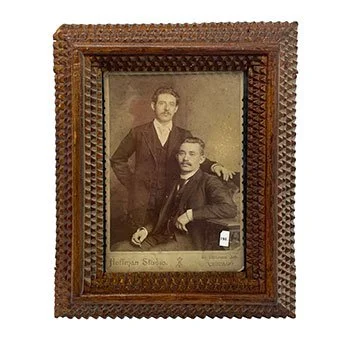 Image 1 of 7
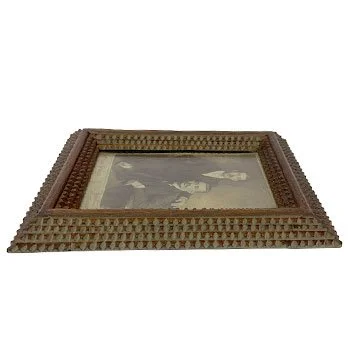 Image 2 of 7
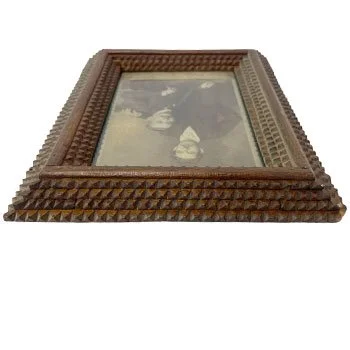 Image 3 of 7
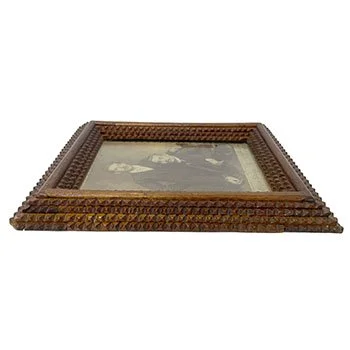 Image 4 of 7
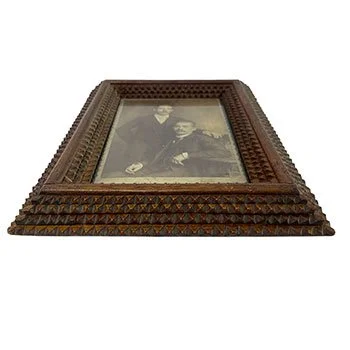 Image 5 of 7
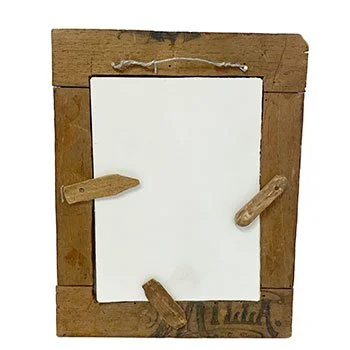 Image 6 of 7
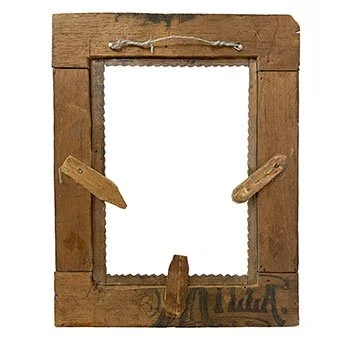 Image 7 of 7